 LMS-SPADA INDONESIA
Course Content
Topic outline
-
-
Assalamualaikum Wr. Wb.
Hey there, math enthusiasts!
Welcome to the English for Mathematics course. Get ready to embark on a journey where numbers meet language. We're thrilled to have you on board and can't wait to explore the exciting world of math in English together.
Let's make learning a blast!
Course Identity
- Course: English
- Course Code: MJU.MAT-040
- Credit Hours: 2
- Semester: Odd Semester
- Study Program: Mathematics Education
- Faculty and University: Faculty of Teacher Training and Education of Universitas Muhammadiyah Jember
Course Brief
This course covers the comprehension, pronunciation, writing, and listening of mathematical terms and concepts (numbers and their operations, algebra, equations, geometry, and trigonometry) in the English language.
Graduate Learning Outcomes
- To be devout to the One and Only God (Allah SWT) and able to demonstrate religious attitudes (A1).
- To possess Islamic character (A12).
- To be capable of applying logical, critical, systematic, and innovative thinking in the development or implementation of science and technology, considering and applying appropriate human values in their field of expertise (GS1).
- To exhibit independent, quality, and measurable performance (GS2).
- To apply concepts and pedagogical-didactic principles of mathematics and mathematical knowledge to conduct innovative learning that utilizes science and technology-oriented towards life skills (SS2).
- To master theoretical concepts of mathematics, including mathematical logic, discrete mathematics, algebra, analysis, geometry, probability and statistics theory, mathematical modeling principles, linear programming, differential equations, and numerical methods to support mathematics education in elementary and secondary schools as well as for advanced studies. (KM2).
Course Learning Outcomes (CLO)
- Able to demonstrate adherence to Islamic values (GLO-1 and GLO-2).
- Able to communicate mathematical concepts in English effectively, both orally and in writing (GLO-3).
- Capable of demonstrating independent and collaborative performance in the learning process or when completing tasks of high quality and measurability (GLO-4).
- Proficient in solving problems in English related to the field of mathematics (GLO-5).
- Mastering mathematical concepts and mathematical terminology in English (GLO-6).
Topic
- Numbers and arithmetic operations
- Algebra
- Trigonometry
- Geometry
Lesson Plan
The Learning Management System (LMS) can serve as an online classroom for interactions between instructors and students, or it can be employed as a platform for in-depth material exploration (flipped learning), or any other model of blended learning.
Assessment
- Attendance: 10%
- Participation: 15%
- Assignments/Cases: 20%
- Midterm Exam (UTS): 25%
- Final Exam (UAS)/Project: 30%
Semester Lesson Plan
Semester Learning Plan serves as a guide for course instructors in conducting semester-long teaching. It includes Learning Outcomes (LO), Course Learning Outcomes (CLO), Learning Analysis, Planned Final Competencies, Semester Lesson Plan (presented in a table with week numbers), planned final abilities, study materials, forms and learning methods, timing, student learning experiences, assessment criteria, and weight indicator indicators, Assignment Design, Midterm Exam Design, and Final Exam Design. The lesson plan can be accessed here: https://bit.ly/englishlp2023
Lecturer
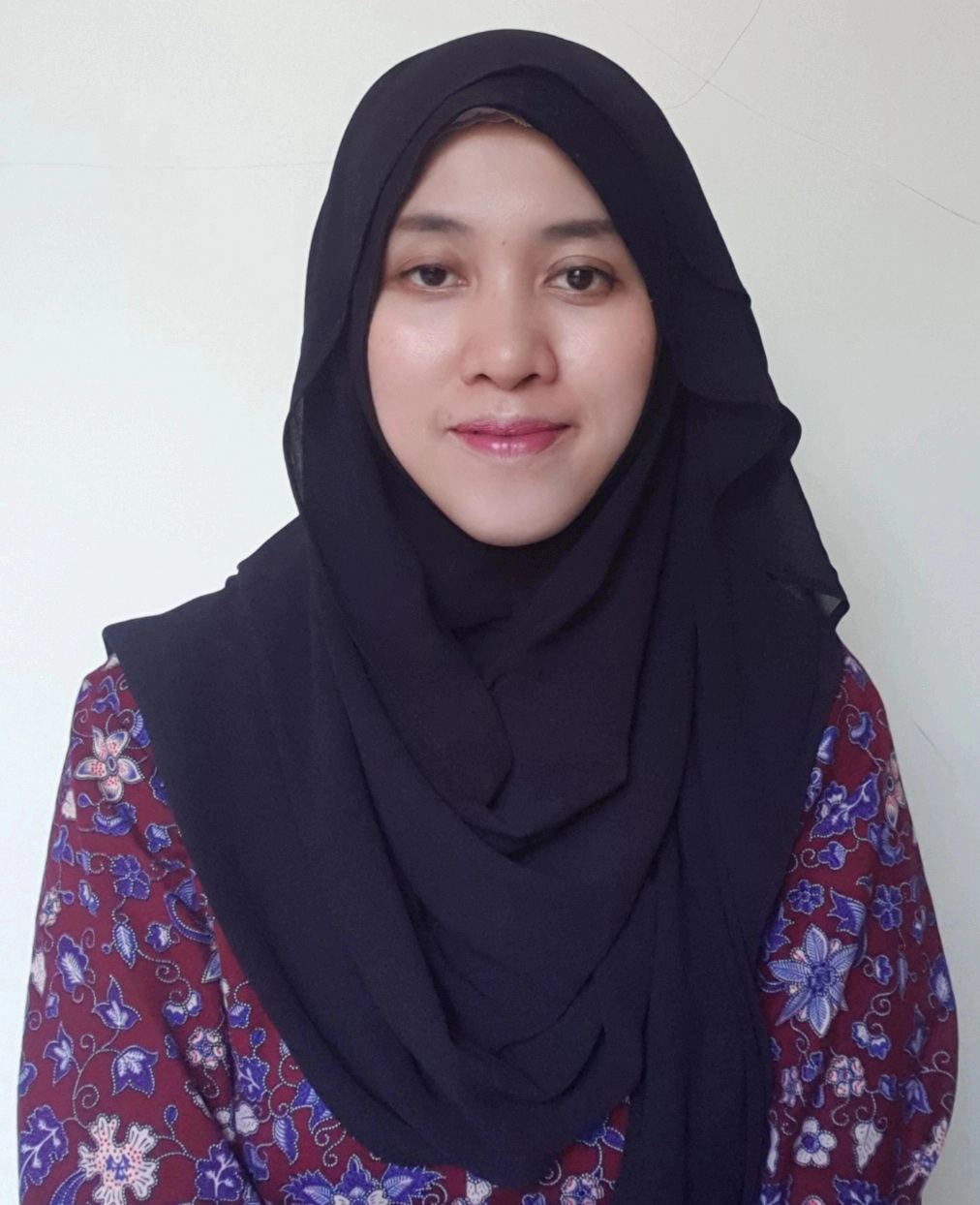 Name: Chusnul Khotimah Galatea, M.Pd.
 NIDN: 0729018802
E-mail: chusnulkhotimah@unmuhjember.ac.id
Institution: Universitas Muhammadiyah Jember

Name: Yoga Dwi Windy Kusuma Ningtyas, M.Pd., M.Sc.
NIDN: 0730038902
E-mail: kusumaningtyas.dwi@unmuhjember.ac.id.
Institution: Universitas Muhammadiyah Jember

Name: Agustin Fatmawati, M.Pd.
NIDN: 15300892001
E-mail: agustin.fatma@gmail.com
Institution: Universitas Muhammadiyah Kupang
References
- Asnawi, M. H., Annisa, H., Ulum, M. M., Arofah, N. L., & Hendrawati, N. E. (2022). Ethnomathematic Exploration at Agung Jami’Malang Mosque in Improving Students' Mathematic Problem-Solving Ability. IndoMath: Indonesia Mathematics Education, 5(1), 13-21.
- Chang, L. A., White, C. M., & Abrahamson, L. (2008). Handbook for spoken mathematics. Livermore National L.
- Kusumawardhani, R. A., Agustina, L., & Galatea, C. K. (2023). Analisis Kemampuan Numerasi Siswa dalam Materi Geometri dan Pengukuran Ditinjau Dari Gaya Kognitif Reflektif dan Impulsif. JEMS: Jurnal Edukasi Matematika dan Sains, 11(1), 107-115.
- Munthahana, J., & Budiarto, M. T. (2020). Ethnomathematics Exploration in Panataran Temple and Its Implementation in Learning. Indonesian Journal of Science and Mathematics Education, 3(2), 196-209.
- Ningtyas, Y. D. W. K., Galatea, C. K., Ishartono, N., & Adikalan, N. H. (2023). Learning Trajectory for Learning Multiplication Rules with Islamic Values using Realistic Mathematics Education Approach. Vygotsky: Jurnal Pendidikan Matematika dan Matematika, 5(2), 123-134.
- Sterling, M. J. (2023). Trigonometry for dummies. John Wiley & Sons.
- Rumsey, D. J. (2019). Statistics Workbook for Dummies with Online Practice. John Wiley & Sons.
- Ryan, M. (2015). Calculus workbook for Dummies. John Wiley & Sons.
- Ryan, M. (2006). Geometry Workbook for Dummies. John Wiley & Sons.
- Safitri, A. H. I., Novaldin, I. D., & Supiarmo, M. G. (2022). Uma Lengge Traditional Building as a Source of Ethnomathematics-Based Mathematics Learning Implementation. EDUPEDIKA: Jurnal Studi Pendidikan dan Pembelajaran, 1(1), 45-52.
- Supiyati, S., & Hanum, F. (2019). Ethnomathematics in Sasaknese Architecture. Journal on Mathematics Education, 10(1), 47-58.
-
Greetings, students!
Welcome to our English for Mathematics course, where we embark on a journey to bridge the realms of language and numbers. In this course, we'll delve into the intricacies of mathematical concepts with a focus on language proficiency. Our exploration begins with a detailed overview encompassing the course content description, sub-learning outcomes (Sub-LOTC), learning outcome indicators, and a comprehensive learning scenario. Understanding this course introduction is crucial as it provides a roadmap for your learning journey. By grasping the course's foundations, you'll gain a clearer perspective on the objectives, enabling you to navigate the complexities of mathematical language more effectively. Embrace this introduction as a valuable tool for unlocking the doors to a world where mathematical precision meets linguistic fluency. Together, let's embark on this exciting adventure!
Description of Teaching Materials
- Reading & Listening Comprehension in Mathematics Education: This material focuses on enhancing students' ability to comprehend mathematical concepts through reading and listening. It involves engaging with various texts, such as articles, lectures, and educational materials related to mathematics education. The goal is to strengthen both written and oral communication skills in the context of mathematical topics.
- Presentation of English for Mathematics: In this segment, students will develop proficiency in presenting mathematical ideas and concepts in English. The emphasis is on effective communication, clarity, and precision while delivering mathematical content. Students will learn how to structure and deliver presentations, making them adept at conveying complex mathematical information in a language that transcends borders.
- Writing Report (Mathword): This component focuses on honing students' skills in written communication specific to the field of mathematics. Students will learn to articulate mathematical ideas, theories, and problem-solving processes through the creation of reports. The term "Mathword" indicates a fusion of mathematical content with language proficiency, ensuring that students can express mathematical concepts fluently in written form. The objective is to produce clear, well-structured reports that effectively convey mathematical information to a diverse audience.
Sub Learning Outcomes of the Course (Sub-LOTC)
- Capable of pronouncing, writing, and listening to the concepts of numbers and operations in English (CLO-2).
- Capable of analyzing the concepts of numbers and operations in English (CLO-5).
- Proficient in pronouncing, writing, and listening to algebraic concepts in English (CLO-2).
- Competent in analyzing algebraic concepts in English (CLO-5).
- Skilled in pronouncing, writing, and listening to trigonometric concepts in English (CLO-2).
- Capable of analyzing trigonometric concepts in English (CLO-5).
- Proficient in pronouncing, writing, and listening to geometric concepts in English (CLO-2).
- Competent in analyzing geometric concepts in English (CLO-5).
- Capable of providing a rational critical analysis of students' success and failure in solving problems in English related to concepts of numbers and operations, algebra, trigonometry, and geometry logically (CLO-3, CLO-4).
- Able to create a simple design to support the resolution of problems in English related to concepts of numbers and operations, algebra, trigonometry, and geometry correctly and precisely (CLO-3, CLO-4).
Indicators
- Demonstrates accurate pronunciation, clear written expression, and effective listening skills when presenting and discussing numbers and operations in English.
- Applies analytical skills to deconstruct and comprehend the underlying principles of numbers and operations, showcasing a deep understanding of mathematical concepts in the English language.
- Exhibits a high level of proficiency in articulating algebraic concepts through accurate pronunciation, clear written communication, and attentive listening in English.
- Demonstrates competence in analyzing algebraic concepts in English, displaying the ability to break down complex algebraic ideas and convey them effectively.
- Displays skillful communication in English, involving precise pronunciation, well-structured writing, and attentive listening when presenting and discussing trigonometric concepts.
- Applies analytical skills to comprehend and analyze trigonometric concepts in English, showcasing a deep understanding of the principles involved.
- Demonstrates a high level of proficiency in conveying geometric concepts in English through accurate pronunciation, clear written expression, and attentive listening.
- Exhibits competence in analyzing geometric concepts in English, showcasing the ability to break down intricate geometric ideas and convey them effectively.
- Provides a rational and critical analysis of students' success and failure in solving problems related to numbers and operations, algebra, trigonometry, and geometry in English, demonstrating logical reasoning.
- Demonstrates the ability to create well-structured designs that support the resolution of problems related to numbers and operations, algebra, trigonometry, and geometry in English, ensuring correctness and precision.
Learning Scenario
In this learning scenario, Case-Based Learning (CBL) and Project-Based Learning (PJBL) methods are employed to enhance understanding, pronunciation, writing, and listening of terms and concepts in mathematics (numbers and operations, algebra, equations, geometry, and trigonometry) in English. Students will explore a case study through the Learning Management System (LMS) - eStudy platform, engage in online discussions using virtual meeting applications, create presentations using PowerPoint, explore geometry using Geogebra, and reflect on their experiences through Flipgrid. This scenario is designed to create a deep and interactive learning environment, where the comprehension of mathematical concepts is integrated with the effective development of English language skills.
You can watch the introductory video below for a brief description of the course, including learning outcomes, assessment, and more. Let's practice together, support each other, and make learning English and math enjoyable. Thanks for joining, and let's have a great learning experience!
-
After checking out a video about course introduction, it's time to dive into some basic material. We'll be going over essential math terms that you'll encounter throughout your course. You can download the following materials to help you along the way. Happy learning!
-
Hello, everyone! Today, we'll kick off our exploration of Whole Numbers with a discussion. What do you know about number terms? Let's dive into the material covering the names of numbers, the real number system, and specifically, whole numbers. After that, we'll tackle an assignment focused on whole numbers. Stay engaged as we watch a video on basic math symbols and operations. Lastly, we have a unique task for you – a pronunciation assignment through Flipgrid. Let's make learning about whole numbers both insightful and fun!
-
Hey all, you might be aware that NUMBERS are everywhere.
You see numbers on doors, in shops, on telephones, on TV, on the TV remote control, etc.
In this topic, we learn how we NAMED NUMBERS we see!
-
There are different types of numbers in Maths, which we learn. We are going to discuss all the types here in this material.
-
We'll explore what a whole number is and the properties we use. Please kindly download the material and practice some exercises at the end of it.
-
Discuss "Number Terms" to explore various concepts and terminologies related to numbers. Actively participate, share insights, and ask questions to deepen your understanding of fundamental numerical terms. Let's delve into the world of numbers together!
-
Again, numbers are everywhere in our world. Learn about whole numbers by completing this math lesson. We're going to practice pronouncing whole numbers, the properties, and Math symbols. Let's take a look at the video!
-
Dear students, after learning and understanding all the materials, now it’s your turn to pronounce or say some Math terms in English.
What should you do in this task?
1. Please open the https://flip.com/ website on your laptop or gadgets. If not, you can download "flip" application on your mobile phone and install it.
2. Then, join a group by inputting this code 703b7c1e.
Have fun!
Or you can just click this link https://flip.com/703b7c1e
-
Hello, everyone! Today's session kicks off with a deep dive into "Fraction Facts." We'll spice things up with a crossword puzzle game to make learning fractions engaging. Next, we'll switch gears and explore decimal fractions through an enlightening video. Get ready for some reflective questions on the material, and we'll conclude our session with a practical case study problem about fractions in the baking business. Let's explore the fascinating world of fractions and decimals together!
-
We're going to begin this topic by exploring some essential fraction facts. These facts will be the solid foundation you need to fully grasp the concepts of fractions and decimals.
-
Hey guys, let's have some fun! Grab a pen and tackle this crossword about fraction terms. It's a great way to spice up your vocab skills. Enjoy the challenge!
-
Hey everyone! Check out this video on decimal numbers - it's a breeze, I promise. Learn how to read, write, and use decimals in everyday life. It'll make numbers fun and useful!
-
Please make at least 5 questions about decimal number! These questions must relate to the subject matter and teaching practice of decimal numbers.
-
Please make a group that consist of 2-3 people and solve this case study problem!
-
-
Hello, everyone! Today's session kicks off with exploring the concept of percentages. We'll enhance our understanding by watching a video on converting between fractions, decimals, and percentages. Dive into some mathematical problem-solving involving percentages, and cap off our session by expressing mathematical expressions in English. Let's make percentages an easily digestible topic together!
-
Hey there, take your time to dive into the percentage learning materials. It's a pretty chill topic!
-
Hey folks, there's this cool video on converting between fractions, decimals, and percentages. Check it out – it's super helpful!
-
Hey folks, give those math problems related to everyday life a shot. It's a practical way to apply what you've learned!
-
Hey folks, whenever you're ready, give those math expression writing assignments a go. It's not as tough as it sounds, and it's kinda fun!
-
-
Hello, everyone! Today's session starts with an introduction to algebra, paving the way for a discussion on how algebra manifests in our everyday lives. We'll then dive into the core material on equations. Cap off our learning with an exciting task centered around the application of algebra and equations. Let's delve into the fascinating world of algebra together!
-
Hey, everyone. We are going to learn about algebra, recognize important terms related to algebra. Are you ready? Prepare your learning tools and don't forget to note down the important points!
-
In our daily lives, we utilise algebra quite a bit—often without even realising it! Not only can we use algebra to solve most of our problems involving calculations, but we require it. We will recognize situations in real life that call for the use of algebraic applications as well as illustrations of such applications.
-
Well, this time we will continue learning together about "Equation". Let's get started!
-
Now, it's time for you for applying what you've learned into practise. happy learning!
-
-
Hello, everyone! Today's session kicks off with a discussion on the contribution of combining like terms, shedding light on its significance. Following that, we'll dive into the realm of algebra, specifically focusing on combining terms. Next up is a video session on factorizing quadratic expressions. Cap off our learning journey with an engaging task that ties it all together. Let's explore the world of combining terms and factorizing!
-
Hello everyone, building on our previous session focused on algebra and equations, we're now shifting gears to explore the nuances of combining like terms and factorization.
Please reply to the topic I have provided in the discussion column. -
It's time to hit the material and explore the world of algebra!
I recommend delving into the topic of combining terms. Take a moment to study and grasp the essentials of this algebraic concept. Enjoy the learning journey!
-
Let's take a break from the textbooks and check out this laid-back video on factorizing quadratic expressions. No stress, just good vibes and quadratic fun!
-
Hi, let's make math a breeze! Your task: dive into combining terms and factorizing. Take it easy, and remember, it's all about the process. Get started whenever you're ready, and feel free to reach out if you need a hand. Happy problem-solving!
-
-
Hello, everyone! Today's session begins with a lively discussion on angles in everyday life, highlighting their practical applications. Following that, we'll delve into the study of angles, exploring their properties and characteristics. Test your knowledge with a quiz, and to conclude our session, engage in a thought-provoking case study problem about exploring angles. Let's make angles come to life through discussion and application!
-
Participate in a discussion on "Angles in Everyday Life" to explore their practical applications in various real-world scenarios. Share insights and examples to deepen your understanding of how angles play a crucial role in our daily experiences. Let's uncover the significance of angles together!
-
Explore the essentials of angles in this module, covering their properties and applications. Gain a solid understanding that sets the stage for practical problem-solving and real-world applications. Let's delve into the world of angles together!
-
Complete the angles quiz to assess and reinforce your understanding of this geometric concept. This quick assessment will test your knowledge and help solidify the fundamental principles of angles. Good luck!
-
Complete the case study problem on exploring angles. This task challenges you to apply your angle concepts in real-world situations, fostering critical thinking. Dive into the case study to uncover the practical applications of angles. Happy exploring!
-
-
Hello, everyone! Today's session kicks off with an engaging discussion on trigonometric angles. Following that, we'll delve into the intricacies of trigonometry, exploring its principles and applications. Cap off our exploration with a quiz to test your understanding and a practical task to apply your newly acquired knowledge. Let's dive into the world of trigonometry together!
-
Hello everyone,
Before we delve into our upcoming lesson, let's take a moment to explore a foundational concept in trigonometry – radians. Understanding why radians are significant and how they differ from measuring angles in degrees is crucial for a comprehensive grasp of trigonometric principles.
-
Explore the fundamentals of trigonometry with this module, delving into key concepts and their applications. Gain a solid understanding of angles, triangles, and their relationships, setting the stage for practical problem-solving and real-world applications. Let's embark on this journey of trigonometric exploration together!
-
Take on the trigonometry quiz to assess and strengthen your understanding of this mathematical concept. This brief quiz will test your knowledge and application of trigonometric principles. Best of luck!
-
Complete the trigonometry assignment to apply and reinforce your understanding of this mathematical discipline. This task will challenge you to solve problems related to angles, triangles, and their relationships. Dive into the assignment and sharpen your trigonometric skills!
-
-
Hello, everyone! As we embark on our Mid-Semester Exam, I wish you all the best in showcasing the knowledge and skills you've acquired so far. Take a deep breath, stay focused, and let your understanding shine. Good luck to each one of you!
-
Please accomplish the midterm exam individually and upload your answers to the Learning Management System (LMS) within the allocated time.
-
-
In today's session on "Plane Figures," we'll begin by watching an instructional video on geometric plane and solid figures. Following that, we'll dive into the material covering the properties and area of plane figures. To apply our knowledge, we'll engage in a case study problem that explores real-world geometric-inspired scenarios. Let's embark on this exploration of plane figures together!
-
Watch the geometry video on planes and solid figures to grasp fundamental concepts and properties. This video will enhance your understanding of two-dimensional planes and three-dimensional figures, preparing you for further discussions and activities. Enjoy the viewing experience!
-
Explore the properties and areas of plane figures in this module. Gain insights into the characteristics and spatial dimensions of different geometric shapes, enhancing your problem-solving skills in geometry. Let's delve into the world of plane figures together!
-
Tackle a case study problem inspired by geometric scenarios. Apply your geometric knowledge to real-world situations, enhancing problem-solving skills. Dive into the case study to discover the practical applications of geometry in everyday inspiration!
-
-
Dive into the world of solid figures by exploring the instructional video provided. Watch, learn, and absorb the key concepts presented. Afterward, challenge yourself with a quiz to reinforce your understanding. Following the quiz, get hands-on with the practical application by solving 3D puzzles in the "Unraveling 3D Puzzles" assignment. This engaging exploration will not only solidify your grasp of solid figures but also offer a fun and interactive way to apply your knowledge. Happy learning!
-
Watch the instructional video on solid figures to grasp essential concepts related to three-dimensional shapes. This brief yet informative video will lay the groundwork for our upcoming discussions and activities. Enjoy the learning experience!
-
Complete the quiz on the elements of three-dimensional shapes to test and reinforce your understanding. This quiz covers key aspects of spatial structures and will contribute to strengthening your grasp of geometric concepts. Good luck, and enjoy the challenge!
-
Engage in a quiz on "Unraveling 3D Puzzles" to apply your knowledge of spatial structures and geometric concepts. This quiz offers a hands-on challenge, allowing you to explore and solve puzzles related to three-dimensional shapes. Enjoy the interactive learning experience and put your understanding to the test. Good luck!
-
-
Hello, everyone! Welcome to our session on "Volume and Surface Area of Plane Figures." Today, we'll engage in a discussion about volume and surface area, followed by an in-depth exploration of the material covering the volume of solid figures. Cap off the session by working on an assignment related to these topics. Get ready for an insightful and interactive learning experience!
-
Join the conversation in the forum on 'Volume and Surface Area.' Share your practical examples or challenges related to these concepts and actively participate in discussions by responding to your classmates' experiences and insights.
-
Delve into calculating the volume of solid figures in this module. Learn the methods and formulas for determining the space occupied by three-dimensional shapes. Gain a solid understanding of volume calculations for various geometric figures. Happy learning!
-
Complete the task on calculating the volume of solid figures. Apply the learned methods and formulas to solve problems related to determining the space occupied by three-dimensional shapes. This assignment will enhance your understanding of volume calculations for different geometric figures. Good luck!
-
-
Hello everyone! Welcome to our session on "Mathematics in Real Life." In this topic, we'll delve into the practical applications of mathematics in our everyday experiences. Watch the instructional video provided to deepen your understanding. Additionally, get ready for an exciting collaborative task exploring "Mathematics in Real Life in Cultural Context." I'm eager to see your perspectives and insights unfold in this dynamic exploration of math in the real world. Let's dive in and make mathematics come alive!
-
Discover the application of mathematics in everyday situations through the "Math in Real Life" module. This material highlights the practical relevance of mathematical concepts in various real-world scenarios. Dive in and explore how mathematics plays a crucial role in our daily lives. Happy learning!
-
Watch the "Math in Real Life" video to see how mathematical concepts are applied in everyday situations. Gain insights into the practical side of math and its relevance in real-life scenarios. Happy watching!
-
Create a video presentation on the research article focusing on the study's findings related to geometry and upload it in your social media. Please follow the assigned group list below and ensure to highlight key geometric concepts discussed in the research:
- Group A: ETHNOMATHEMATICS IN SASAKNESE ARCHITECTURE
- Group B: Uma Lengge Traditional Building as a Source of Ethnomathematics-Based Mathematics Learning Implementation
- Group C: Ethnomathematic Exploration at Agung Jami’ Malang Mosque In Improving Students' Mathematic Problem Solving Ability
- Group D: ETHNOMATHEMATICS EXPLORATION IN PANATARAN TEMPLE AND ITS IMPLEMENTATION IN LEARNING
Ensure to cover the research's implications, applications, and significance within the assigned geometric context. The presentation should be clear, concise, and well-illustrated. Each group member's contribution is essential for a comprehensive understanding of the topic.
-
-
Hello everyone! Welcome to Week 1 of our project adventure. This week is all about Project Introduction and Research. I'm excited to see your ideas take shape as you delve into the initial stages of our project. Dive deep into your research, lay the groundwork, and let your creativity flourish. Best of luck, and I'm looking forward to seeing the innovative paths your projects will take!
-
Discuss the crucial role of geometry in architecture on the provided discussion board before starting the "Exploring Geometry in Architecture" project. Share insights, questions, and thoughts to collectively understand the fundamental principles of geometry and inspire ideas for the upcoming project. Active participation will enrich our knowledge and set the stage for a creative exploration of geometry in architecture. Let the conversation begin!
-
Please carefully examine the steps outlined in the project sheet and proceed to carry out each task as per the provided instructions and within the specified timeline. Adhering to these guidelines is imperative for the successful and timely completion of the project.
-
Upload the progress of Week 1 project tasks that you have completed according to the project timeline provided. Ensuring all relevant documentation and files are included.
Project Timeline:
- Day 1-2: Introduction to the project, essential question, and objectives.
- Day 3-4: Select architectural structures and gather initial research.
- Day 5-7: Explore geometric principles related to architecture.
-
-
Hello, everyone! Welcome to Week 2 of our project endeavor. This week, our focus is on Blueprint and Model Preparation. I'm eager to see the detailed blueprints and the strides you make in getting your models ready. Remember, precision in preparation paves the way for successful execution. Best of luck, and I'm looking forward to witnessing your progress!
-
Thoroughly review the steps detailed in the project sheet and proceed to execute each task in accordance with the provided instructions and within the specified timeline. Strict adherence to these guidelines is crucial for ensuring the project's successful and timely completion.
-
Please submit the Week 2 project tasks' progress that you've worked on in accordance with the project timeline outlined below.
- Day 8-10: Develop a detailed blueprint for the scale model.
- Day 11-13: Gather necessary materials for construction.
- Day 14-15: Begin constructing the scale model based on the blueprint.
-
-
Hello everyone! Welcome to Week 3 of our project journey. This week is all about Model Completion and Presentation. I'm excited to see the progress you've made so far, and now it's time to bring your models to life. Remember to focus on clarity and creativity in your presentations. Good luck, and I can't wait to witness your fantastic project developments!
-
Take a close look at the outlined steps in the project sheet, and then proceed to perform each task following the provided instructions and adhering to the specified timeline. It is essential to strictly adhere to these guidelines for the project's successful and timely completion.
-
Submit the progress made on Week 3 project tasks, ensuring that your work aligns with the project timeline outlined below.
- Day 16-18: Continue and complete the construction of the scale model.
- Day 19-20: Prepare and rehearse the presentation.
- Day 21: Finalize the scale model and deliver presentations.
-
-
Hello everyone! Welcome to our 16th class meeting. Today marks an important milestone as we wrap up the semester with the final project submission. I'm eager to see the culmination of your hard work and creativity in exploring geometry in architecture. Remember, this project not only showcases your understanding but also highlights the practical applications of geometry in the real world. Best of luck with your submissions, and I look forward to reviewing your insightful contributions!
-
Based on the results of the Exploring Geometry in Architecture project, upload the project's output and presentation files.
-
 LMS-SPADA INDONESIA